Dec 25, 2025
Massive Floating Solar Farm to Power Lower Seletar Reservoir by 2029
National water agency PUB has unveiled plans to transform a large part of Lower Seletar Reservoir into a massive solar farm . By 2029, the new floating solar farm—spanning 115 hectares, the size of 150 football fields —will cover 36% of the reservoir’s surface.
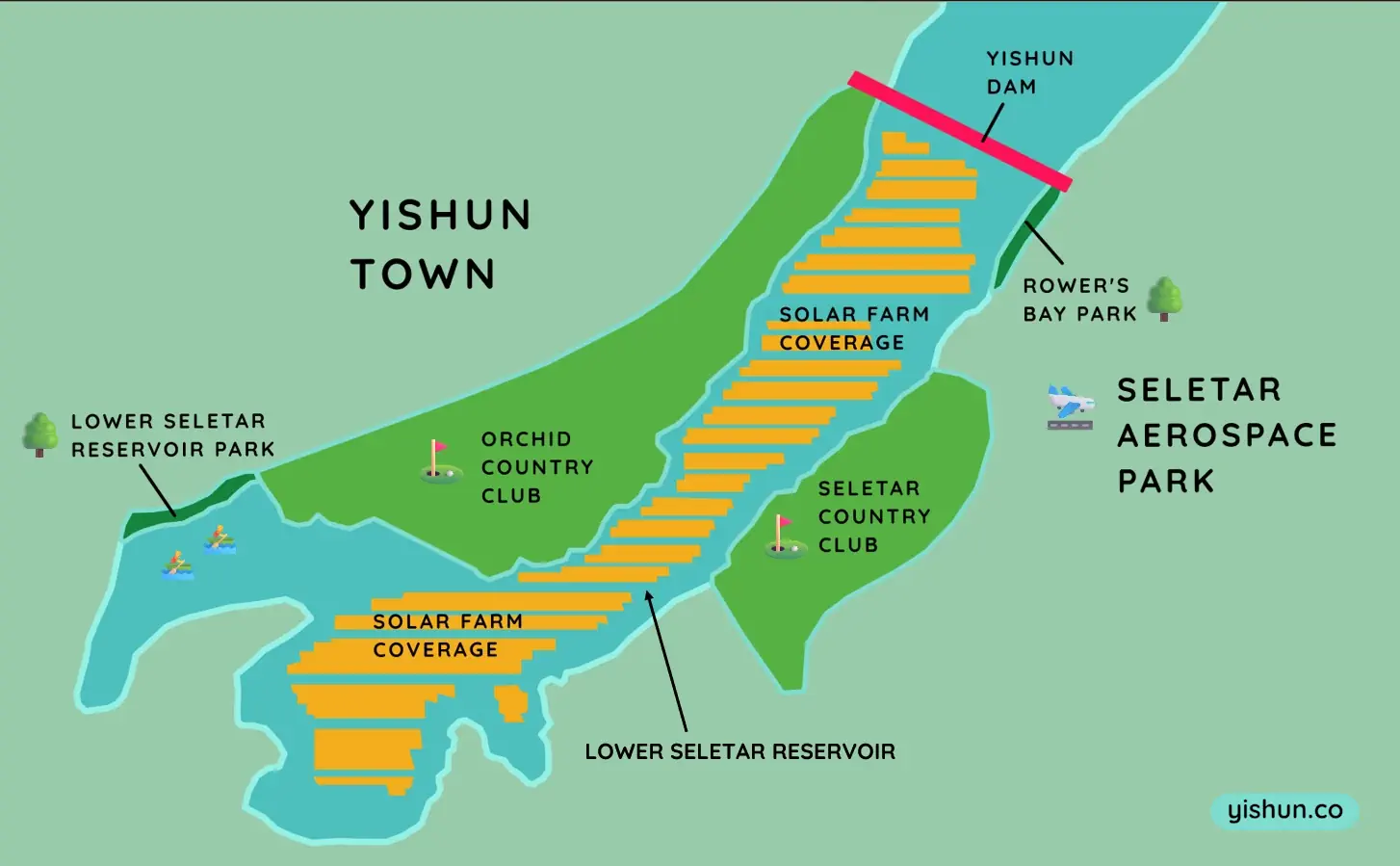
The project, disclosed in the environmental impact assessment (EIA) report released on Dec 23, is set to generate at least 130 megawatt-peak (MWp) of electricity, with 35 arrays of solar panels each having a 3.7 MWp capacity. This will contribute approximately 6.5% of the Energy Market Authority’s (EMA) national target of 2 gigawatt-peak (GWp) by 2030.
Lower Seletar Reservoir as a Natural Coolant
Construction is slated to begin in 2027 and complete by 2029. The facility will feature solar modules encased in tempered glass and aluminum, supported by high-density polyethylene (HDPE) flotation structures. These will be anchored to the reservoir floor using concrete sinkers.
Technically, the reservoir environment offers a unique advantage: the water acts as a natural coolant, allowing the panels to generate energy more efficiently than land-based systems. While the farm is projected to raise the water temperature by roughly 0.2°C by 2060, the PUB has deemed the impact on water quality and aquatic life to be minor.
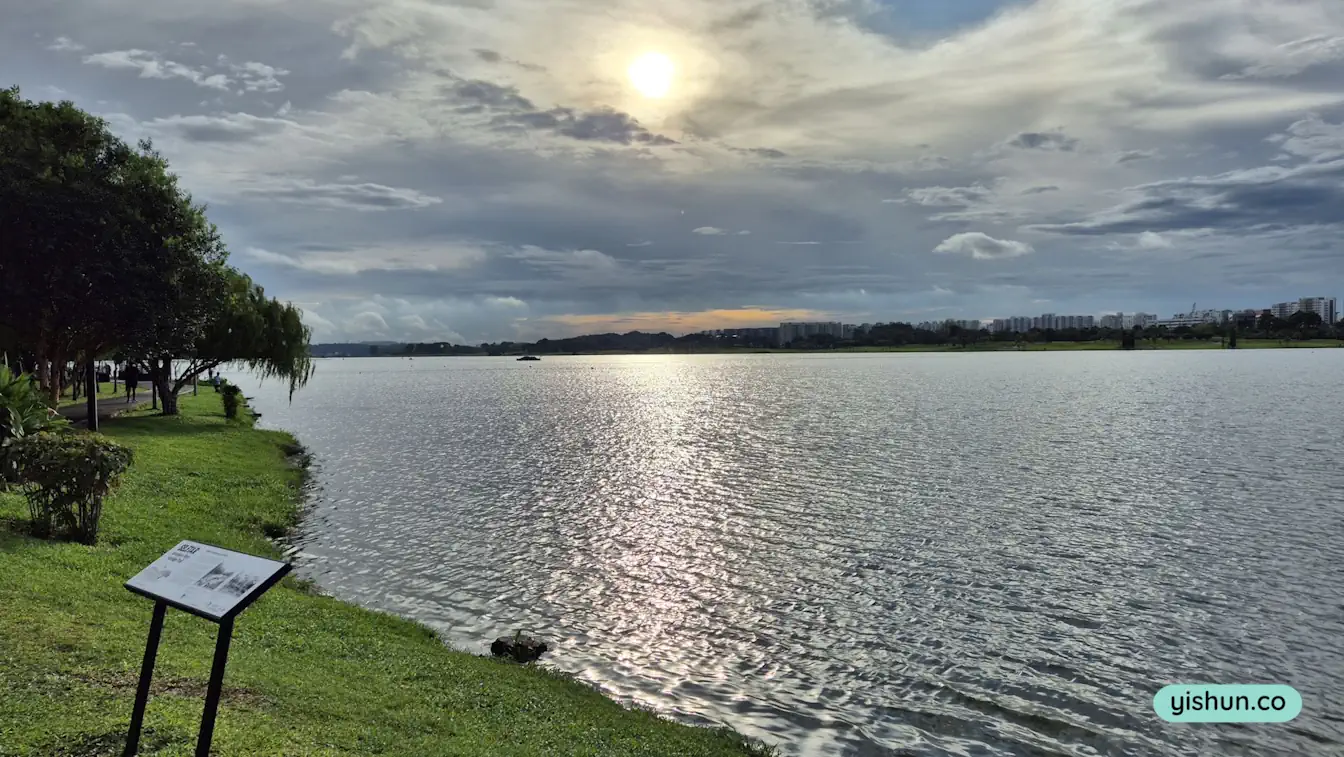
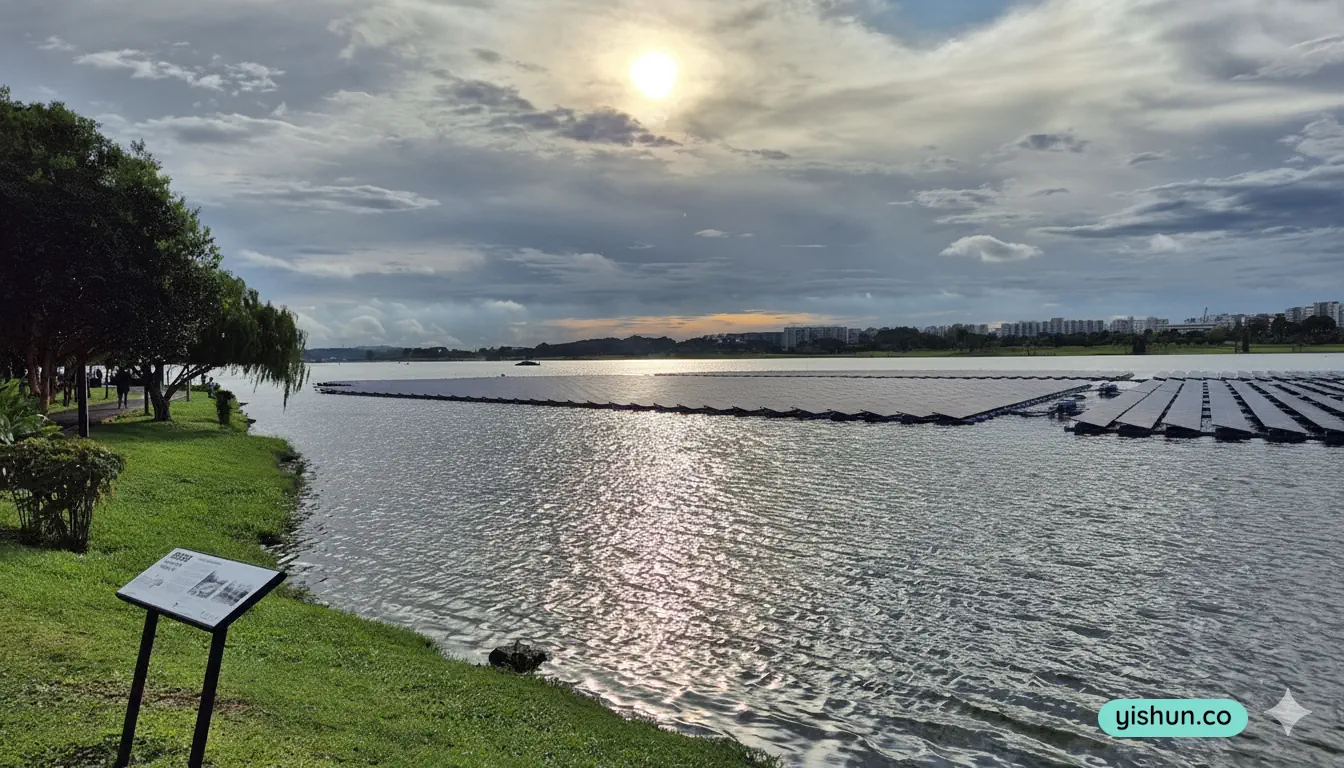
Lower Seletar Reservoir - Before and After
Here's what the current reservoir looks like and what it may look like once the floating solar farm is installed.
Balancing Green Energy and Biodiversity
The 384-page EIA report, prepared by EnviroSolutions & Consulting (ESC), emphasizes a "nature-first" approach to construction. While the project is a win for clean energy, the reservoir is a thriving ecosystem; surveys conducted between August 2023 and May 2024 recorded 218 animal species, including 27 conservation significant (CS) species
Of the 27 CS species recorded, 19 are expected to use the reservoir or shoreline for foraging or other activities, including smooth-coated otters, insectivorous bats, dragonflies, waders, shorebirds, crakes, and raptors.
Five nationally critically endangered species were identified: little grebe, cotton pygmy goose, long-winged tomb bat, greater woolly horseshoe bat, and Sunda pangolin
To protect these residents, the report recommends:
- Expanded Buffer Zones: Panels will be placed at least 70m from the shoreline, with a wider 150m buffer in the south-west corner to avoid wildlife "hotspots."
- Avian Corridors: The solar arrays will be broken into smaller "islands" rather than a single mass, providing flight paths and landing zones for waterbirds.
- Operational Safety: While the panels will reduce the available surface water for foraging, experts noted that species like herons and egrets may actually use the panels as perches to aid in hunting.
Preserving Public Recreation
The PUB assured the public that the solar farm will not interfere with existing recreational activities. The arrays will "steer clear" of the established water sports areas, ensuring that sailing, kayaking, and dragon-boating—which have been part of the reservoir’s culture since 2004—can continue uninterrupted.
Designated corridors will also be maintained to allow vessel access, specifically for Singapore Civil Defence Force (SCDF) operations.
You can access the 384-page Environmental Impact Assessment (EIA) report for December 2025 at the PUB website https://www.pub.gov.sg/Public/WaterLoop/Sustainability/Environmental-Studies.